
By Jo Canning
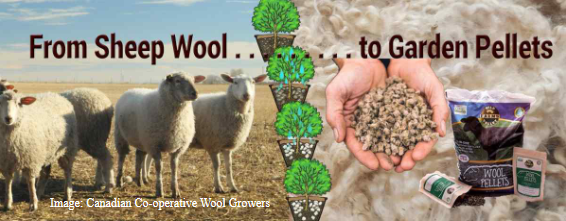
Wool waste – raw wool left over after the shearing & cleaning process — has been used for hundreds of years by gardeners and farmers as mulch and compost on food crops. These bits of wool add nutrients to the soil, hold water to lower irrigation needs, and deter pests by exclusion and with the oily lanolin naturally present in raw wool. Three forms of wool waste are used today. The original form, small handfuls of wool spread out on top of the soil, and more recent – and easier to use and store — wool pellets and felted blankets.
A Valuable Soil Amendment
Recent studies show that wool waste is more than just a form of mulch. Wool is composed of the natural protein keratin, which is similar to the protein making up human hair. Naturally occurring soil microorganisms break down keratin, feeding the soil and improving tilth without creating any type of environmental hazard.
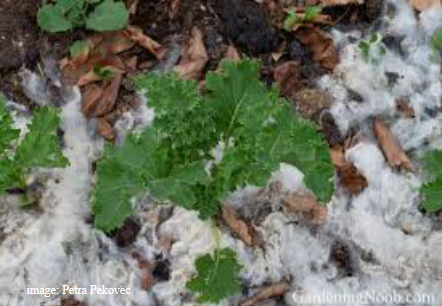
Wool waste provides the following benefits:
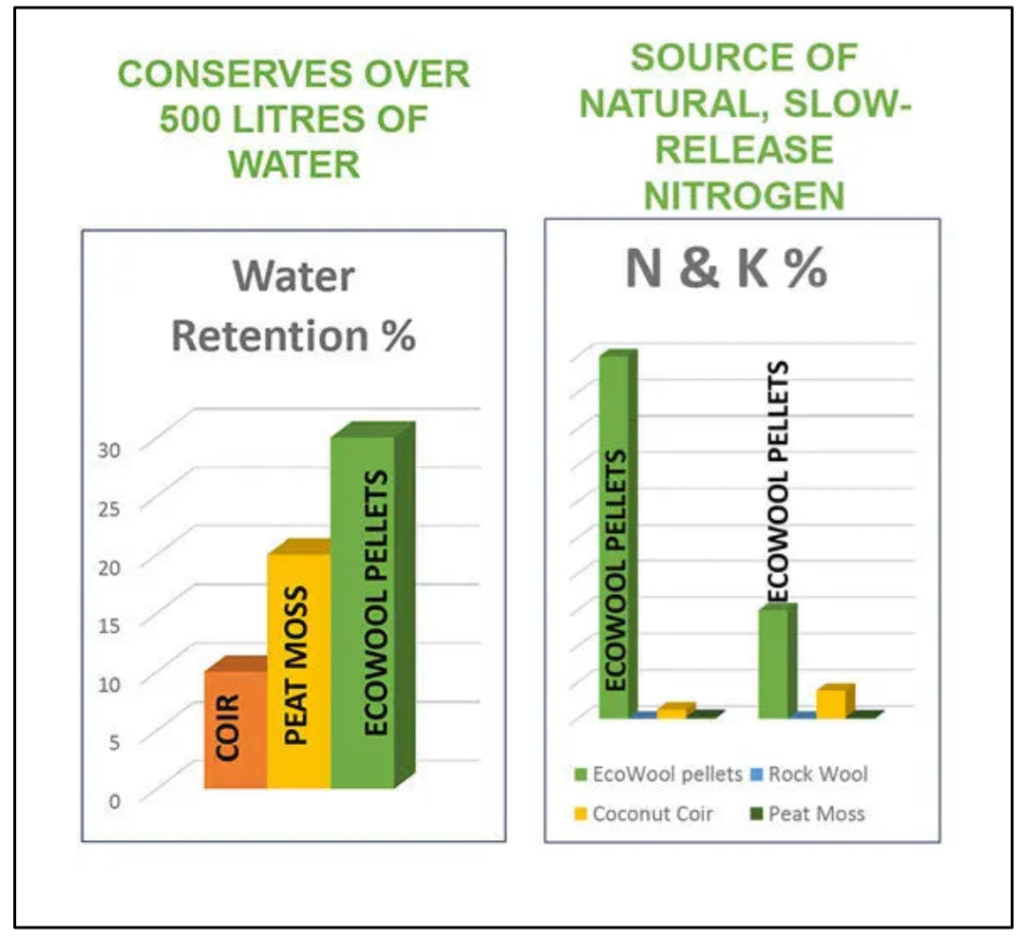
- A good source of slow-release nitrogen
- An average NPK of 9-0-2
- Breaks down slowly, releasing nutrients for up to 6 months
- Releases potassium, calcium, magnesium, iron, sulphur and numerous trace elements in the bio-available
forms that plant roots can uptake easily - Holds up to 20 times its weight in water, increasing soil’s water storage capacity
- High absorbency slows water movement through the soil, preventing run-off and giving plants enough time
to uptake nutrients in the ground water - Expands when wet, so when tilled in creates
spaces in the soil that improve aeration - Non-toxic to beneficial insects and bees
- Provides nesting material for local birds
- Stores indefinitely when kept cool and dry
In the Garden
For use in beds, each spring scratch in or turn under approximately 1 kg / 2.2 lbs of loose fleece pieces or pellets over 2.3 square metres /25 sq. ft. You can also mix it into regular compost to use any time in the growing season. A layer of wet, “puffed up” pellets or pieces of fleece around plants acts as a slug deterrent.
A Good Start for Seeds and Young Plants
In addition to providing good compost additive, wool pellets provide an easy-to handle enhancement to potting mediums. To create a potting mix, use 50 grams / ½ cup of moistened pellets in 4 litres / 1 gallon of peat-free potting soil. It is good in seeding trays, too. Moisten pellets with a little water and blend in a food processor. Do not to make a slurry, just enough to make a wet, fluffy mess. Squeeze out any excess moisture. Mix in 1-1 ratio to peat-free potting soil. Of special value is that it holds water in the potting mix at optimum moisture for germination while adding slow release-nitrogen that feeds seedlings.
Finally, Two Caveats
- Make sure it is stored in mouse-proof containers!
- Keep it out of reach of pets, who are often attracted to its smell and texture.
Resources
- Canadian Co-operative Wool Growers www.wool.cakijm
- Kestrel Pellet Farm https://krpelletco.com/
- Blossom & Branch Farm https://blossomandbranchfarm.com/
- The Woolmark Company http://woolmark.com/industry/research
- University of Vermont, Centre for Sustainable Agriculture https://www.uvm.edu/sites/default/files/The-Center-for-Sustainable-Agriculture/wool%20pellet%20info/wool_handout_feb22.pdf