 Vancouver Island Master Gardeners
Gardening Newsletter
by Linda Gilkeson
September 10, 2026
As planting winds down and harvesting continues, here are some things to do this month:
Tomato pruning: It is time to prune off new shoots and flower clusters on indeterminate (vining) varieties of tomatoes in the garden. Late flowers will set fruit too late to become mature tomatoes and cutting them back forces the plant to focus on ripening fruit already on the plant. For tomatoes are in a greenhouse, you can wait another month to prune back the flowers. If you have indeterminate (bush) tomatoes that are still producing flower, then prune them back now, too. It looks like a stretch of good weather this month so late tomatoes should ripen, but when rainy, cool weather sets in you can ripen any remaining tomatoes indoors, off the vine. Tomatoes that have begun to turn slightly yellowish green will ripen off the plant. Pick them and spread them out one layer deep in boxes or trays in the coolest place you have indoors (e.g., basement floor, back room, garage or other space that isn’t kept as warm as the rest of your home). If you heard it was necessary to cut tomato plants and hang them up to get the fruit to ripen, rest assured that is a misconception: once the stem is cut, the plant plays no role in ripening the fruit. There is no need to wrap each tomato in newspaper to prevent rot from moving from one fruit to the next as you spread them out so they are not touching in the containers.
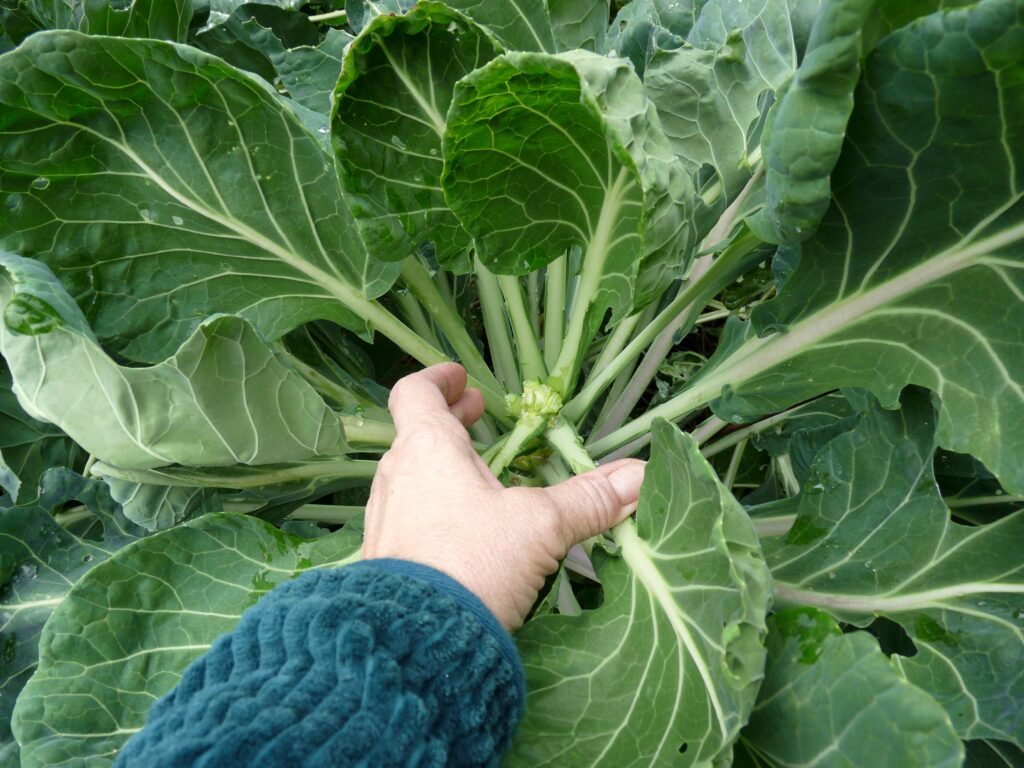
Brussels sprouts pruning: By the end of September, pinch out or snip off the tips of the Brussels sprouts plants to force development of sprouts. Once you remove the growing point it is surprising how rapidly sprouts fill out farther down the stem, even if they are only the size of a pea right now. Brussels sprout plants should be at least half a meter tall (2 feet) by now, preferably much taller. If your plants are smaller than that, try feeding liquid fertilizer immediately to get as much growth as possible by the end of the month, then pinch out the tips. If your plants are only a foot or so high at this point, they were either planted too late or short on nutrients and won’t produce a crop. You could leave them in the garden for the winter, anyway, because they should send up tasty flower shoots in the spring from the places on the stem where sprouts would have grown.
Last chance growth boost: If your cabbage, kale and other leafy greens, leeks or root crops still look small, give them a boost with liquid fertilizer immediately, before days get too short and cool for growth (use fish fertilizer or other commercial products or soak compost in a bucket of water for a day and use that). Also, make sure plants are getting enough water as the soil is still pretty dry in most gardens, unless you were under one of the local downpours in recent thunder storms.
Late sowing: Early to mid-September is when I pull back mulch and sprinkle corn salad seeds on the soil under squash, tomatoes, peppers, beans and other plants that will be finished over the next month. Corn salad is an exceptionally hardy little plant that grows in cool weather and makes a good winter salad. If you have a cold frame, tunnel or greenhouse, you can also sow other hardy greens, such as winter lettuce, Komatsuna, mizuna and leaf mustards for winter salads. This year, with an unusually strong El Nino weather pattern upon us at least until February, a warmer than usual winter is expected, which means it might work to do a late sowing directly in the garden too. Even if the plants don’t amount to much before winter, they should survive a mild winter to produce a very early crop. You can also sow lettuce, spinach, dill, cilantro, radishes, in November, which is late enough that the seeds won’t germinate until early spring. I find these really late seeds come up much earlier than I expect and certainly earlier than you can work soil to sow in the spring. Be sure to protect seedbeds with chicken wire or wire mesh covers to prevent birds from scratching up the seeds over the winter.
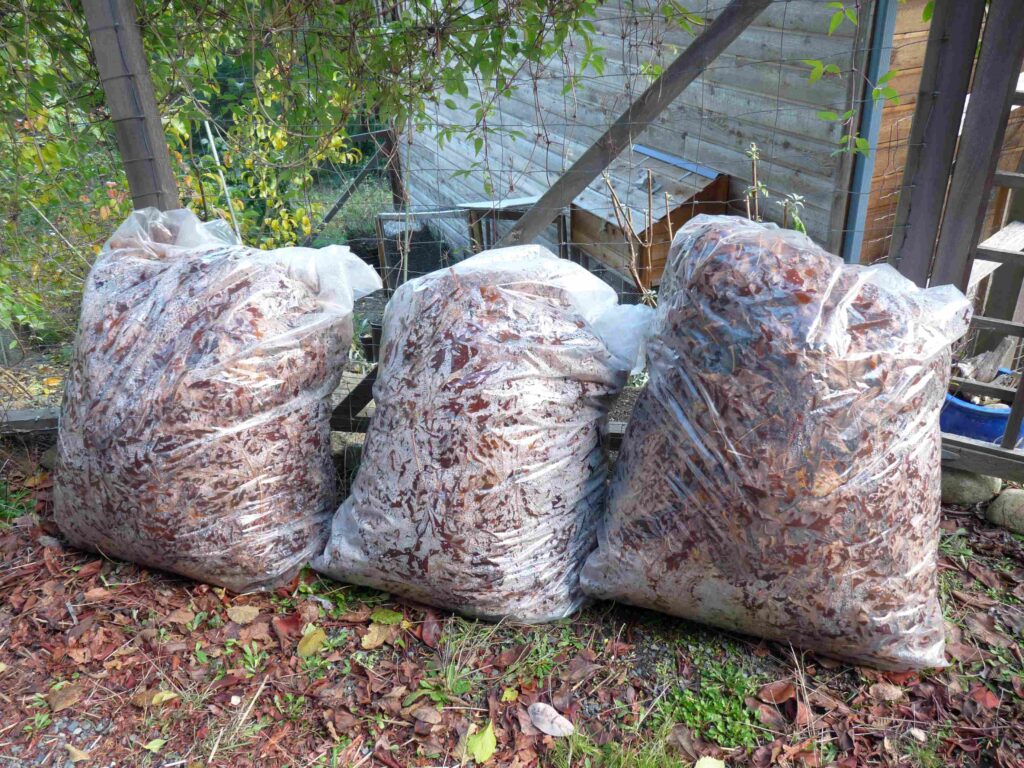
Collect fallen leaves: Leaves that are falling now (early this year due to the prolonged drought) are very dry, which makes them ideal for storing until next summer for use as mulch. Keep them dry all winter in plastic bags or bins with covers that shed rain so they don’t decompose before you need them for summer mulching. Later on, there will be plenty of damp leaves to use for winter mulches, so take the opportunity right now to collect and store dry leaves.
Carrot covers: Just a note because I get asked this every year: It is too early to remove the insect netting or floating row cover protecting carrots from carrot rust flies. There is enough warm weather left in the season to allow the last generation of rust flies to lay eggs. Usually, removing covers at the end of October is safe, but if we have a warm fall, late flies may hang around so just don’t be in a hurry to uncover carrot beds this fall.
Recycling corner: For more detail on tomato and Brussels sprout pruning as well as tips on how to tell winter squash is ready to harvest, see my newsletter of September 5, 2024 https://www.lindagilkeson.ca/gardening_tips.html