 Vancouver Island Master Gardeners
Gardening Newsletter
by Linda Gilkeson
April 20, 2026
Finally! Warm days without freezing nights are forecast for the next 10 days—after what has been a pretty chilly April. It seems like garden centres are bringing in vegetable starts earlier every year, so if you planted seedlings and they got frosted last week, start again, as it looks like it is warming up nicely. Peas, lettuce and other salad greens can usually weather a light frost without serious injury, but might have been damaged in gardens that had a hard frost last week. Early planted seedlings may also have fallen prey to climbing cutworms. They will be winding up their caterpillar phase in the next week or two to pupate in the soil so at that point they stop eating plants (the moths emerge later in the summer).
Yesterday I put away the heat mat I use to germinate seedlings because the last of the seeds I start indoors have germinated. Once seeds germinate, bottom heat is no longer needed (in fact, keeping seedlings on bottom heat too long makes them grow elongated, spindly stems, especially if they aren’t in bright enough light). At this point, setting seedling trays outdoors in the sun on every warm day is the healthiest thing for them and also gets the plants used to full-spectrum sunlight so they won’t sunburn after they are transplanted to the garden. The seedlings I will transplant outdoors this week include onions and leeks that were sown in early March and summer broccoli and cauliflower, also onion sets. Starts of chard, lettuce or other salad green or cabbage family should be fine outdoors now. I am surprised that my soil is still rather cool at 14oC [57oF] today, so I am holding off on planting my celery and celeriac seedlings for a little longer. I will wait a bit to sow carrots, beets and other root crops until the soil is warmer and germination quicker. With the higher temperatures of the last couple of days, it shouldn’t take long.
If your tomatoes, squash and other warmth-loving starts are getting too large by now and you see roots poking out of the holes in the bottom of the container, move them to larger pots. It is still too cool for them outdoors in most gardens. Of these crops, tomatoes and zucchini are perhaps the most robust. If put out prematurely, they may stop growing, but will probably survive, especially if you cover them with a cloche or floating row cover for cool nights and cloudy days. The cells in the leaves and roots of warmth loving crops simply don’t function in cool temperatures the way the cells of cool-tolerant plants do, so wait until May to plant beans, cucumbers, corn, squash, peppers, eggplant, etc. outdoors.
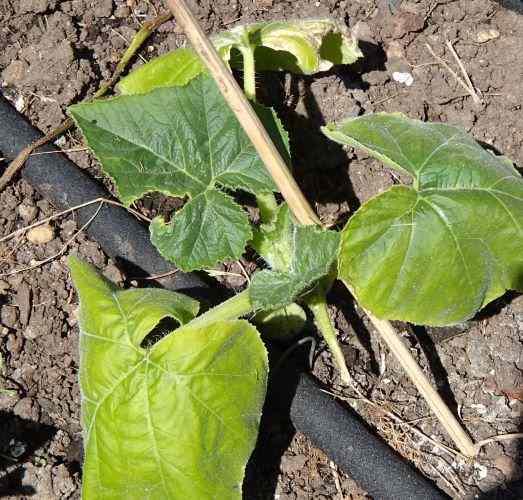
Set out too early but making a comeback
Watering new fruit? With the sudden switch to warmer weather and with little rainfall in the forecast, I had to remind myself to start the watering regime for the new apple tree I planted at the end of February. If you planted fruit trees this spring, remember that bare root trees need at least a gallon of water twice a week for the rest of the growing season. If a fruit tree or shrub was in a pot of soil or a ball of soil wrapped in burlap when you bought it, it should have some root growth and can get by with 1-2 gallons of water once a week for the season. I wouldn’t skip a watering unless there had been a downpour of 1-2 centimeters of rain, something less and less likely to happen as we head into what is forecast to be a long, hot summer. This morning I marked 2 dates every week on my calendar until fall for tree watering to be sure to remember to do it. Even if you will put your new trees on an irrigation system eventually, make sure each new tree gets weekly buckets of water until fall.
Grow your own onion sets: If you would like to try this, the first week of May is perfect timing to sow seeds for sets. These are the tiny onions that you see for sale now in garden centres. By planting sets, you produce mature onions a 4-6 weeks earlier than onions grown from seedlings. Look for a variety that is noted as being an especially good storage variety, because they have to keep without sprouting until they can be planted in the garden next year at this time. So not sweet Spanish types or other early of sweet onion varieties. Sow seed densely in a small area of a garden bed (a 30 cm square/1-foot square patch should produce about 75 onion sets). Don’t add compost or fertilizer to the soil for this year because we want to keep the onions small. Sow 5 seeds per square inch. After that, just grow them for the season, crowded and competing with each other until their tops fall over naturally in late summer; pull, cure and store as for other storage onions. Keep the sets dime-sized or smaller as these will be perfect for planting next year. Sets larger than a nickel are likely to bolt (go to flower) so I plant them in a dense row and use them up as scallions before they grow big enough to get into trouble.
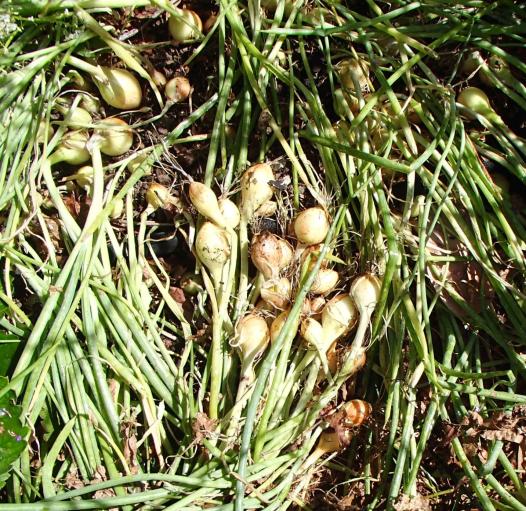
Onion sets at harvest time
Where to get locally grown organic veggie starts: Local sources of organic vegetable starts, usually more varieties than are found in garden centres: Salt Spring: Chorus Frog Farm, 190 Jasper Rd. has a long list of organic vegetable and flowers seedlings ready now. Later in the season they will also have starts of many overwintering veggies. https://thequarryfarm.ca/chorus-frog-nursery. See my April 21, 2025 newsletter on buying veggie starts (what to avoid!): https://www.lindagilkeson.ca/gardening-pdf/Winter%20Gardening%202025%20-%20April%2021.pdf.
A reminder for new readers: Check my list of messages archived by date on my website for additional information that might be useful for this time of year. https://www.lindagilkeson.ca/gardening_tips.html.