 Vancouver Island Master Gardeners
Welcome to a Unique Ecosystem
by Jan Thorsen
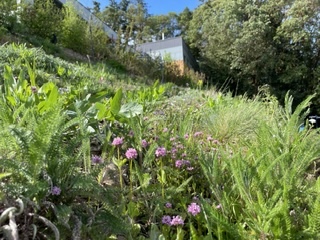
Well, not so unique, according to Caroline Josefsson, a professor at Vancouver Island University, if you lived around 6000 years ago. At this time savanna-like Garry oak ecosystems covered coastal sections of southeastern Vancouver Island and the Gulf Islands. These ecosystems formed during a warm, dry period provided food, medicine, and material for Coast Salish Peoples. Around 4,000 years ago, the climate became cooler and moister, and conifers such as Douglas-fir and western red cedar expanded their ranges. For millennia, Josefsson says, “the Coast Salish Peoples maintained this ecosystem, adapted to summer drought along the southeast coast of Vancouver Island as open meadows that sustained a rich diversity of plants and animals.”
Garry oak ecosystems (GOES) are one of the most biodiverse ecosystems, but also one of the most threatened in Canada (Erickson and Meidinger, 2007). Named after a keystone species, the only native oak species in British Columbia, the Garry oak (Quercus garryana), they are assemblages of a large number of plant and animal species, many of whom are rare and threatened.
This spring, Dr. Josefsson invited me to visit the Garry oak restoration site at the Nanaimo, VIU campus. Perched atop a steep hillside and previously dominated by non-native grasses and invasive shrubs, the site has been transformed into a diverse plant community consisting of 92 native species, including a hedgerow and an open meadow. Dr. Josefsson told me that the impetus for this project is the recognition that many people want to contribute positively to our local environment. We are aware of climate change and see the effects of recent severe summer droughts on our forests as well as urban landscapes. Happily, she noted, our university is encouraging us to “explore and promote indigenous content, considerations, cultural understanding, perspectives, traditional knowledge and ways of knowing into and across the institution (VIU Academic Plan, 2017).
Wanting to learn more, I asked Dr. Josefsson to tell me about herself and this most inspiring and ambitious project.
Interview with Dr. Josefsson
What is your position at VIU?
I am a Biology professor at Vancouver Island University, where I teach botany, plant biology, biochemistry, and cell and molecular biology.
What led to your interest in Garry oak ecosystems?
I grew up in Sweden and moved to Nanaimo from Seattle in 2006. I have always enjoyed plants and gardening and have a background in horticulture from my undergraduate studies. After moving to Vancouver Island, I quickly discovered that many of the garden plants I was familiar with struggled in our dry summers. The turning point came in 2011 when Kristen Miskelly of Satinflower Nurseries visited one of my botany classes to speak about the Garry oak ecosystem. Her presentation on the geological, ecological, and cultural history of this remarkable ecosystem completely changed the way I viewed gardening in our region.
Suddenly, my gardening failures made sense. I was trying to grow plants adapted to cool, wet summers instead of species adapted to our local Mediterranean climate. I began incorporating native plants into my own garden and eventually transformed much of my front yard into a Garry oak-inspired landscape.
At the same time, I became involved in botanical surveys of local Garry oak ecosystems with naturalist Kent Anders. Together we documented sites such as Linley Valley, Pipers Lagoon, and Lotus Pinnatus Park. Spending time in these ecosystems deepened my appreciation for the incredible diversity of native plants and their adaptations to drought. The restoration project at VIU grew out of those experiences. During the pandemic, after spending long hours teaching online, I found myself craving opportunities to work outdoors and engage students in hands-on learning. Together with two members of the VIU Eco Club, Emma Simard-Provencal and Jeremy Stacey, I began developing the idea of restoring a neglected piece of campus land as a native plant ecosystem.
The project has many goals. It provides students with practical experience in restoration ecology, plant propagation, and biodiversity monitoring; it creates opportunities to learn about the Garry oak ecosystem as an ecocultural landscape shaped and stewarded by Coast Salish peoples for millennia; and it serves as a demonstration site showing how native plants can be used to create beautiful, climate-resilient landscapes.
How did you obtain the land for the restoration project? Were grants or donations involved?
In early 2021, Emma and Jeremy approached VIU Facilities and received permission to convert the site into a native plant restoration project. The first native plants were installed that spring. Funding came from many sources. Early support from the VIU Students’ Union helped purchase plants, seeds, and fencing materials. In 2022, I received a $5,000 VIU grant that funded additional plant material, tools, and propagation supplies. I was also fortunate to receive two VIU Time Awards, which reduced my teaching load and allowed me to devote more time to coordinating the project and mentoring students. In 2023, a Tree Canada grant helped fund an expansion of the restoration area and supported the purchase of additional native trees and shrubs. Numerous donations of plants, seeds, expertise, and volunteer labour have also contributed to the project’s success.
Could you briefly describe the preparation process for the site?
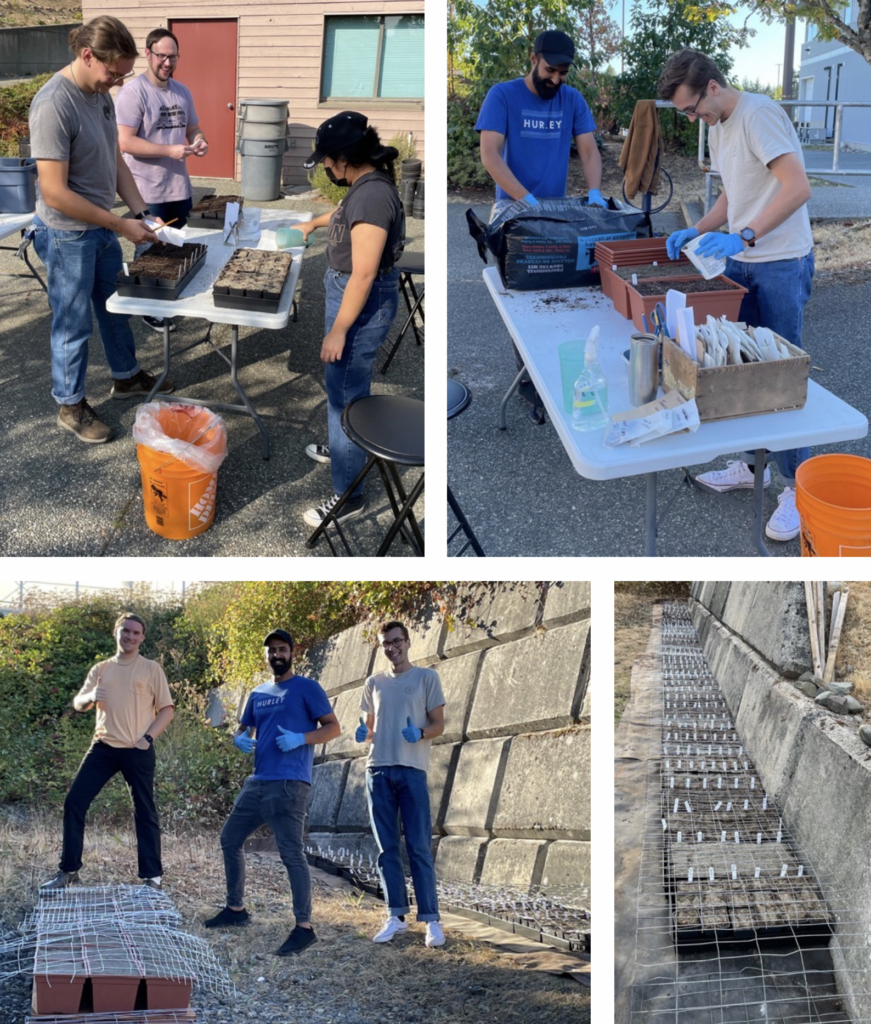
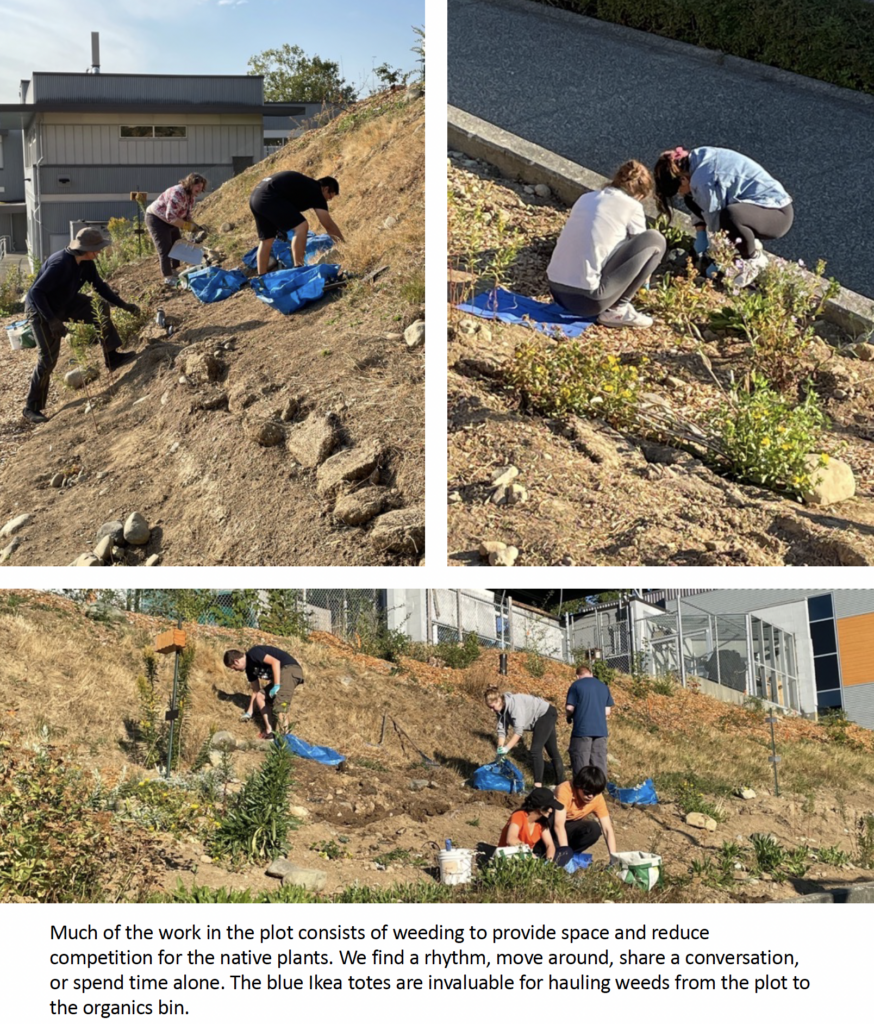
The site initially contained only a single native species—trailing blackberry—and was otherwise dominated by invasive shrubs, non-native grasses, and weedy perennials. Like many restoration projects, we learned through trial and error. Early experiments with tarping proved less successful than we had hoped, as they stimulated a flush of invasive weeds. We eventually adopted a more labour-intensive but effective approach: removing sod, digging out invasive species, and planting native transplants rather than relying primarily on direct seeding. Over time, students developed the skills needed to distinguish native seedlings from weed seedlings, allowing us to gradually introduce more direct seeding. Restoration is a slow process, but after several years the site has been transformed from an abandoned weedy area into a diverse native plant community.
What guided your plant selection process?
The site is sunny, dry, and has no irrigation, so we focused on species naturally associated with dry Garry oak ecosystems of southeastern Vancouver Island.We selected plants that are adapted to summer drought, support pollinators and other wildlife, and contribute to the ecological diversity of the site. Resources such as the Garry Oak Ecosystem Recovery Team’s publications and the plant selection guides produced by Satinflower Nurseries were invaluable in helping us choose species well suited to local conditions.
Where did you obtain the plants?
Many of our herbaceous plants and seeds came from Satinflower Nurseries, while additional trees and shrubs were sourced from Streamside Native Plants. Several Garry oaks were generously donated by Milner Gardens.
We have also grown many species ourselves from locally collected seed. Friends, students, and community members have contributed seed collections, salvaged plant material, and countless hours of volunteer effort. The project has truly become a community undertaking.
Did you amend the soil or install irrigation?
No significant soil amendments have been made. These species are naturally adapted to relatively nutrient-poor soils, and we wanted the site to reflect natural conditions as closely as possible. Similarly, no irrigation system has been installed. With very few exceptions, plants are installed in the fall and expected to establish using natural rainfall. This approach helps ensure that the species we grow are genuinely adapted to local conditions and capable of thriving with minimal inputs.
Who helps with maintenance?
Since 2022, the project has been supported by two paid student assistants each year as well as an extraordinary volunteer effort. Students and community members have contributed approximately 1,000 volunteer hours to planting, weeding, seed collection, propagation, monitoring, and outreach activities. The project succeeds because so many people care about it and are willing to contribute their time, energy, and expertise.
What are your future plans and hopes for this project?
I hope to continue increasing the diversity and ecological value of the original restoration site while expanding opportunities for student learning, community involvement, and ecological research. One goal is to increase our capacity to collect and share seeds with the community, encouraging more people to incorporate native plants into their gardens and landscapes. Every native plant garden helps support pollinators, birds, and other wildlife while reducing the need for irrigation and other inputs. I also hope to strengthen connections with Indigenous knowledge holders and eventually see the site used by VIU’s Elders in Residence as a place to share knowledge about culturally important plants and traditional stewardship practices. More than anything, I hope the project continues to inspire students and community members by demonstrating that ecological restoration is possible, even in highly urbanized settings.
I understand that you have your own Garry oak site in your home garden. Can you describe it?
My front yard is small but densely planted. One section resembles a sunny Garry oak meadow, while another mimics the dappled shade of a Garry oak woodland. Over the years I have incorporated many native wildflowers, grasses, shrubs, and several Garry oaks. The garden has become both a personal experiment and a demonstration of how native plants can create beautiful, low-maintenance landscapes that are well adapted to our local climate.
Finally, what advice would you give to someone wanting to create a native plant garden on their property?
Start small and build confidence gradually. Choose a handful of tough, drought-tolerant native species and learn how they grow before expanding into more ambitious projects. One lesson I learned early on is not to rely heavily on direct seeding until you can confidently distinguish native seedlings from invasive weeds – otherwise you run the risk of eliminating the wrong seedling or letting your desired seedlings be choked out by weeds. Always plant in the fall, after the rains return, otherwise you need to irrigate all summer long to establish your new plants. Make liberal use of wood chips (not bark mulch!) around your woody plants to promote moisture retention and mycorrhizal growth while suppressing weeds. Perennials benefit from wood chip mulching as well. Remember that restoration is a long-term process. Native plant gardens become more beautiful and resilient with time, and even a small patch can provide meaningful habitat for pollinators and other wildlife. These are some of the native species that I have found to be particularly resilient, attractive, and forgiving for gardeners new to native plants:
Shrubs and Small Trees
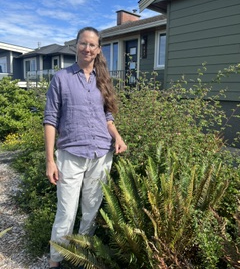
• Saskatoon (Amelanchier alnifolia)
• Kinnikinnick (Arctostaphylos uva-ursi)
• Tall Oregon grape (Berberis aquifolium)
• Oceanspray (Holodiscus discolor)
• Garry oak (Quercus garryana)
• Red-flowering currant (Ribes sanguineum)
• Baldhip rose (Rosa gymnocarpa)
• Nootka rose (Rosa nutkana)
• Common snowberry (Symphoricarpos albus)
Herbaceous Plants and Grasses
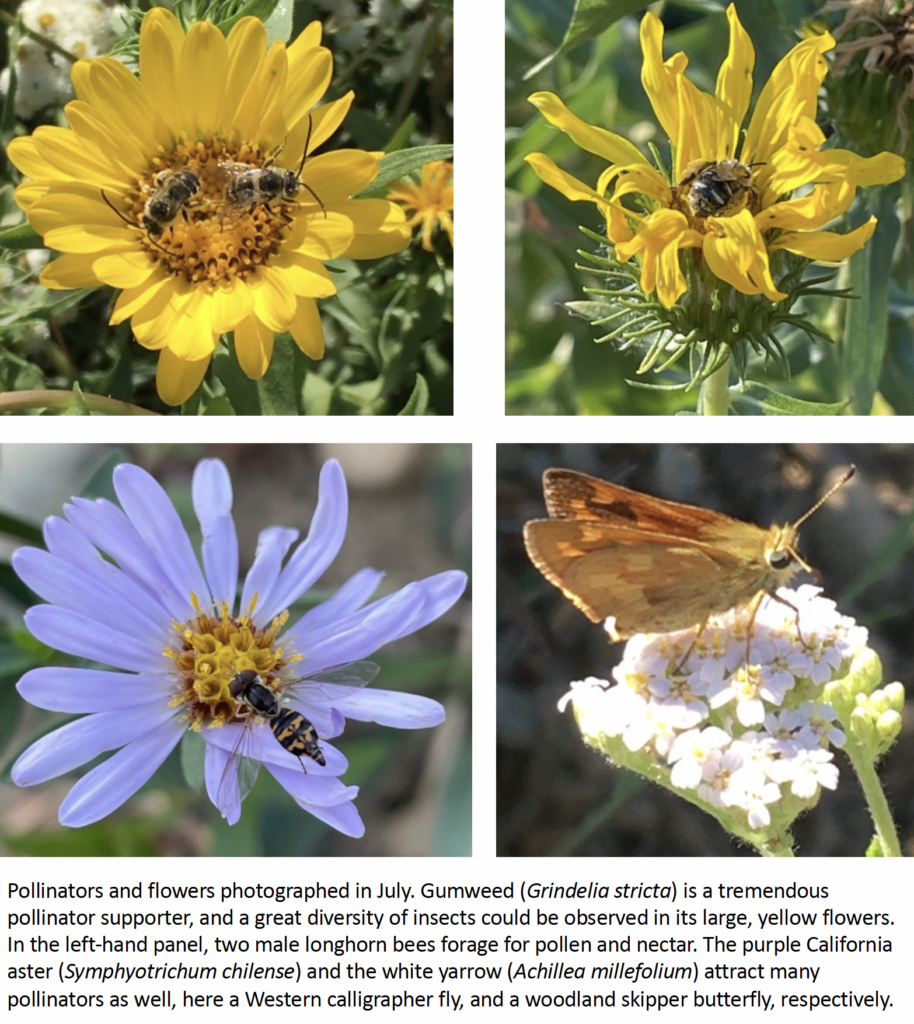
• Yarrow (Achillea millefolium)
• Woolly sunflower (Eriophyllum lanatum)
• Roemer’s fescue (Festuca roemeri)
• Wild strawberry (Fragaria virginiana)
• Gumweed (Grindelia stricta)
• Small-flowered alumroot (Heuchera micrantha)
• Junegrass (Koeleria macrantha)
• Sword fern (Polystichum munitum)
• Selfheal (Prunella vulgaris)

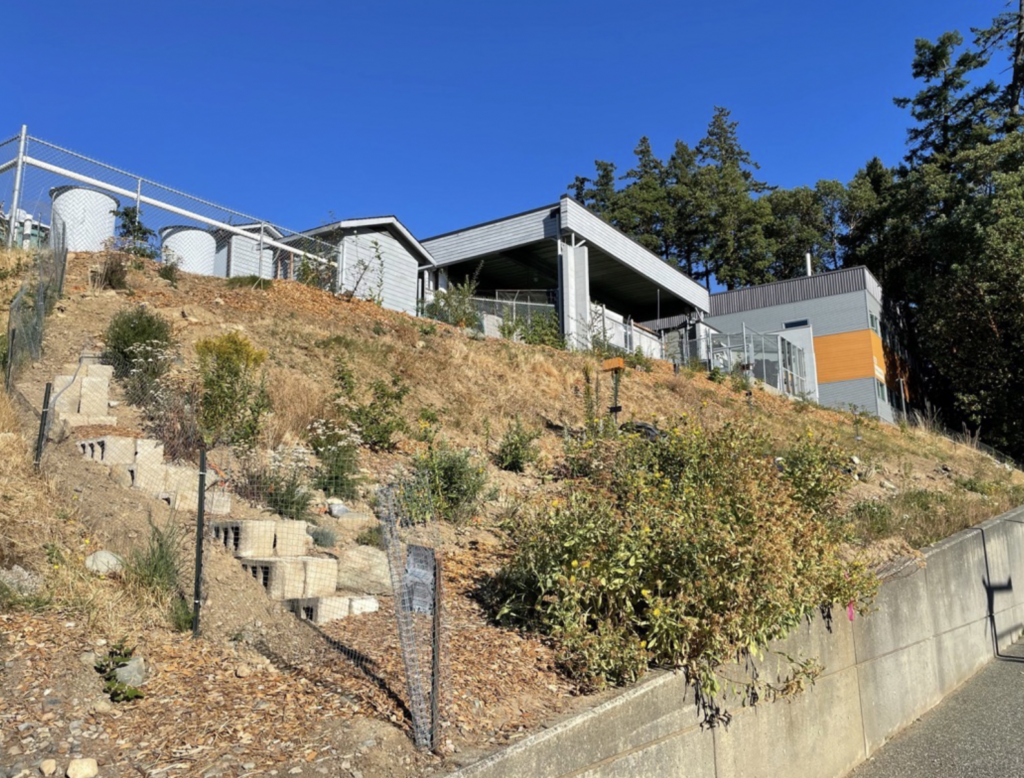
Overview of the plot in September 2022. Despite looking yellow and drought-stricken, the plants in the plot are alive and supporting pollinators, grasshoppers and a family of deer that jump the rabbit-exclusion fence regularly to browse the hedgerow at the top of the slope.
Other resources:
Nurseries and services
Invasive Species Guy (Hunter Jarratt) Design/consultation on landscaping with native plants and ecosystem restoration. Long experience with invasive species removal. Installation of native plants and seeds.
Kiki Nursery (Ladysmith) Native plants & seeds.
Satinflower Nurseries (Saanich & Metchosin locations) Comprehensive selection of native plants & seeds, excellent online plant selection guide.
Streamside Native Plants (Bowser) Great selection of native plants, especially trees and shrubs, excellent online plant selection guide.
NALT (Nanaimo & Area Land Trust) Native Plant Nursery (Nanaimo) Native plants & seeds, online resources.
Fraser’s Thimble Farms (Saltspring Island) Many native plants in stock.
North Arrow Nursery and Landscapes (Nanaimo) info@northarrowlandscapes.com Note from Dorothee: Christine Quist, whom many of you will remember from the Advanced Gardening Course Lecture and the course workshops, is setting up a Native Plant Nursery-exciting! She sent me the list of available plants and since many of you are interested in growing more native plants, I am forwarding you the list. If any of you in the Nanaimo area are interested in sharing an order (since the minimum is $50), I would be happy to purchase some things.
Organizations
Endangered Eco System Alliance. Check out the video clip of Dr. Andy MacKinnon speaking off the cuff about the endangered Garry oak ecosystems in B.C. https://www.facebook.com/reel/1653684889086996/?fs=e&fs=e
Garry Oak Ecosystem Recovery Team GOERT (Victoria) – information about the history and biology of the Garry oak ecosystem, excellent free handbook for gardeners (download PDF).
Habitat Acquisition Trust HAT (Victoria) – excellent guides for ‘Gardening with Nature’.
Homegrown National Park (Canada & USA) – initiative started by Dr. Doug Tallamy, author of Nature’s Best Hope, hugely motivational information about how your actions make a significant difference for local biodiversity and ecosystem health.
NALT Pollinator Project (Nanaimo) – learn about pollinators in our area, register your native plant-enriched yard as part of the Habitat Map and receive a beautiful yard sign.
Pollinator Partnership Canada’s Ecoregional Planting Guides — Selecting Plants for Pollinators: Download the PDF for the Eastern Vancouver Island Ecoregion. https://www.facebook.com/reel/1653684889086996/?fs=e&fs=e
Books
Common Insect Pollinators: A Photographic Guide to Bees, Beetles, Butterflies, Flies, Moths and Wasps of Nanaimo and Area (2024) by Lynda Stevens – available from the NALT Online Shop – a hyperlocal, very user-friendly guide to help you recognize the most common pollinators visiting your garden.
Gardening with Native Plants of the Pacific Northwest (2019) by Arthur Kruckeberg and Linda Chalker-Scott — a very comprehensive guide, recently revised.
Native Plants of British Columbia’s Coastal Dry Belt: A Photographic Guide (2025) by Hans Roemer, Mary Sanseverino
Nature’s Best Hope: A New Approach to Conservation That Starts in Your Yard by Doug Tallamy (also by the same author, Bringing Nature Home: How You Can Sustain Wildlife with Native Plants) – inspirational!
Plants of the Pacific Northwest Coast by Jim Pojar & Andy McKinnon. — the best field guide for native plants in our area, with interesting notes about uses and cultural significance of plants. A must have for field naturalists and gardeners alike. – NEW, REVISED EDITION COMING OUT IN FALL 2026 (“Plants of the Pacific Coast From Alaska to Oregon, including British Columbia and Washington”)