 Vancouver Island Master Gardeners
by Whitney Peek
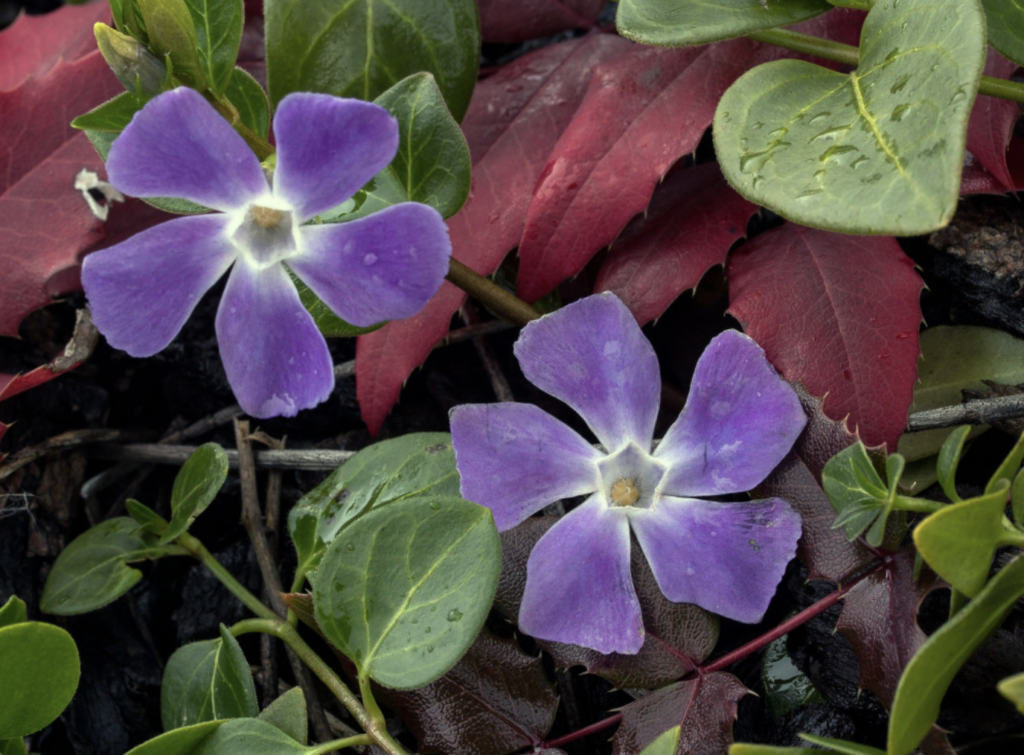
Disturbance is an ecological concept that refers to any event that happens to an ecosystem that causes change or stress. Disturbance is a part of every ecosystem, whether it be by natural disasters at a larger scale, or a tree falling in the forest at a smaller scale. Humans, however, are major disruptors of ecosystems, and one of those ways we disturb is by introducing invasive species. Invasive plants are experts at taking advantage of disturbance and proliferating on a scale that is damaging. They essentially become their own force for disturbance, separating them from “introduced” species that may exist in an ecosystem without causing widespread harm.
In our Advanced Gardening Course, we learn about invasive plants’ ability to alter the environment by out-competing desired garden plants, or choking out the native plants that should be growing in natural areas. Recently, I’ve learned about some of the less visible ways that invasive plants change the environment.
Invasive plants can change the nutrient content, structure, and chemistry of soils. Some examples of how this is possible:
- A landscape full of invasive plants creates different leaf litter from the previous landscape. The nutrients in those leaves, and the compounds leached into soils during decomposition are distinct from what was present before. These leaves can sometimes accelerate decomposition of all leaf litter, changing nutrient cycling and content in the soil.
- A landscape containing a large proportion of invasive plants will also have different root exudates (compounds that roots release into the soil that vary by plant) than would be found in the previous landscape composition. These exudates affect the formation of aggregates in soil and the soil’s ability to store and retain nutrients.
- If the invasive plant in your landscape has antimicrobial, allelopathic or other defensive properties, compounds released into the soil or through leaves may impede the growth of other plants.
These changes may sound small individually, but together, these factors can produce a soil that is very different from what was present before, and they all favour further establishment of other and more invasive plants.
Invasive plant species also have indirect impacts to the environment from the efforts to control or eliminate them. These efforts are essentially another type of disturbance, albeit a sometimes necessary one. Depending on the species and the severity of the invasion, herbicides may be applied (ONLY by licensed professionals) to control invasive species. Although this may remove the desired species, other wanted species can also be eliminated. Herbicide use (especially glyphosate) can also change the fungal content of soils. Elimination of certain fungi in soils, especially ones that have beneficial relationships with native plants, may make their reestablishment after invasive plant removal more difficult, and more susceptible to future invasion by invasive plants.
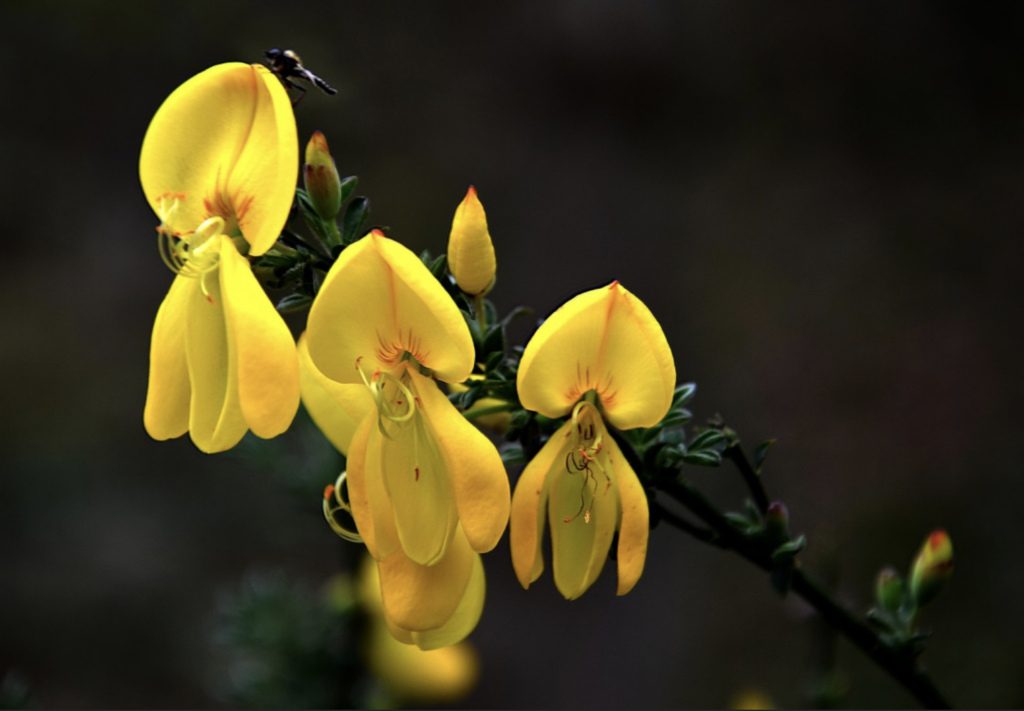
Let’s look at a specific invasive plant that we are already likely familiar with to examine unseen effects on our landscape. Scotch Broom (Cytisus scoparius) is a pernicious invasive plant now common in BC. It is a nitrogen-fixing plant, allowing it to establish easily in nutrient-poor soils, especially ones that were recently disturbed. Nitrogen fixation is also related to the supply of phosphorus in the soil, and lower levels of available phosphorus has been documented in soils of heavily invaded Broom landscapes. These changes in nutrient availability in soils are shown to persist for a decade or more. There is a likely connection between such soil transformation, increases in exotic species like non-native grasses, and decreases in native species in these Broom-dominated landscapes.
It is also interesting (but frustrating) to note that removal of Scotch Broom does not usually reverse these changes described above. Removal is shown in at least one study to be associated with secondary invasions of invasive plant species, ongoing negative effects on soil chemistry persisting for years, and limited success in re-establishment of plant communities post-removal. The lesson to take from this is not that we shouldn’t remove Broom, rather it’s that Scotch Broom must be eradicated immediately upon detection to avoid all of the above, and above all else, prevented from entering the landscape.
My hope in sharing this information about invasive plants, although it may seem somewhat discouraging, is to make our efforts as Master Gardeners to educate the public about invasive species more meaningful (if not more urgent). Any invasive we can prevent from being planted in home gardens, or from being dumped from planter baskets into natural areas, is a win for the gardens and green spaces we all enjoy on Vancouver Island.
Sources for this article:
Carter, D. R., Slesak, R. A., Harrington, T. B., Peter, D. H., & D’Amato, A. W. (2019). Scotch broom (Cytisus scoparius) modifies microenvironment to promote nonnative plant communities. Biological Invasions, 21(4), 1055-1073.
Slesak, R. A., Harrington, T. B., D’Amato, A. W., & Peter, D. H. (2022). Removal of invasive Scotch broom increases its negative effects on soil chemistry and plant communities. Oecologia, 198(1), 243-254.
Weidenhamer, J. D., & Callaway, R. M. (2010). Direct and indirect effects of invasive plants on soil chemistry and ecosystem function. Journal of chemical ecology, 36(1), 59-69.