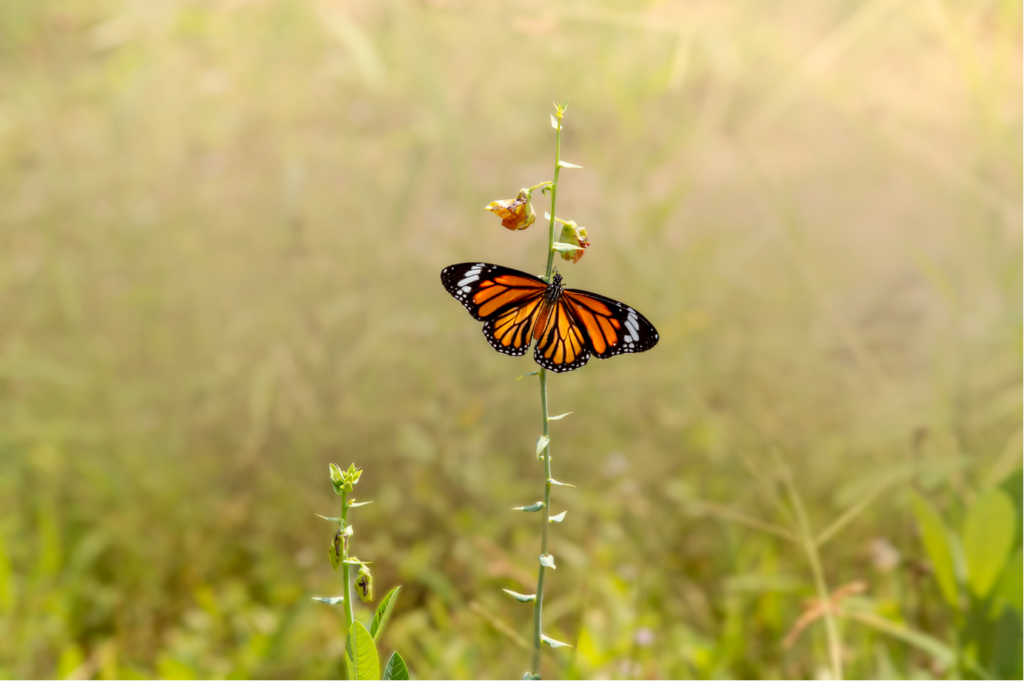
Pollinators play an important role in supporting biodiversity. Pollinators are diverse and include insects such as bees, flies, butterflies, moths, beetles, hummingbirds, bats and others. Approximately 75% of flowering plants depend on pollinators for fertilization and subsequent production of seeds and fruit. One third (1/3) of these flowering plant products are consumed by people and a much larger portion are consumed by wildlife and domestic livestock.
As such, it makes sense to support local pollinators wherever possible. One of the key components in supporting pollinators in our home gardens is creating and protecting the natural habitats essential for their survival. Providing and preventing the loss of their natural habitats is critical to the overall health of our ecosystems and the diversity of local pollinator and beneficial insect populations.
Read on to learn the small steps you can take to make a difference and help support local pollinators on Vancouver Island.
Five Steps for Creating Pollinator Habitats
Just five steps can go a long way in creating pollinator habitats that support all stages of their life cycles. Many home gardens already include a variety of pollinator-friendly flowers and with just a few steps, they can become beautiful, thriving and ecologically purposeful spaces for pollinators and beneficial insects.
STEP 1: Provide Pollinator-friendly Flowers
- Plant for a variety of plant heights, and flower size, shape and colour throughout the season.
- Plant beneficial plants in patches of one species (5+ plants) to reduce foraging time.
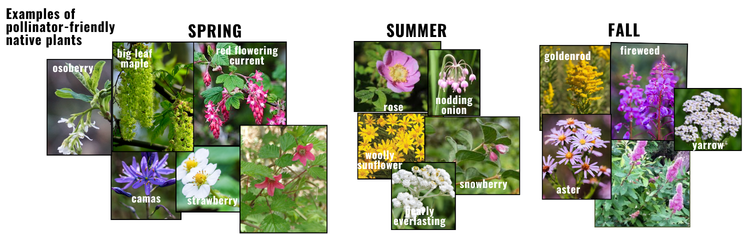
- Augmenting existing gardens with native plants to bloom through the seasons will support local pollinators and increase diversity.
Pollinator-friendly native plants:
STEP 2: Provide Host Plants for Butterfly & Moth Larvae
Adult butterflies & moths lay their eggs on or near plants that the larvae (caterpillars) eat. These plants are referred to as host plants. Some caterpillars are generalists, which feed on many types of plants, while others are specialists which are only able to feed on a very narrow range of plants.
- Plant a variety of host plants for larvae that feed on different types of plants (generalists).
- Include specific host plants for specialists, if known.
Butterflies whose larvae depend on specific host plants:
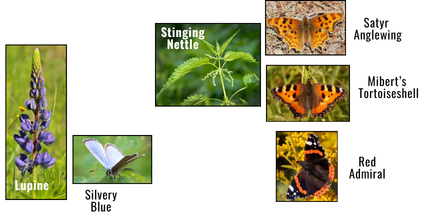
Examples of host plants used by a variety of butterfly & moth larvae:
- Alder
- Aspen
- Cottonwood
- Lupine
- Maple
- Native grasses/sedges
- Ocean spray
- Pearly everlasting
- Pine
- Saskatoon berry
- Sedum
- Stinging nettle
- Wild rose
- Willow
STEP 3: Provide & Maintain Nesting and Egg-laying Sites for Bees
Most native bees are solitary, laying their eggs in a variety of garden locales depending upon the species. Many are wood-and tunnel-nesting (e.g., abandoned beetle tunnels in stumps & snags, woody plant stems & twigs, spaces between field stones), while others are ground nesting (e.g., abandoned rodent nests under grass or in the ground, bare undisturbed sandy soil and under dense piles of brush).
- Leave untended, open patches of bare, well drained, soil for bees to excavate nests.
- Leave hollow and pithy flower stalks intact over winter, e.g., rose, elderberry, raspberry, goldenrod, aster. Prune dead flower stalks in the early spring at varying heights (e.g., 20-60 cm) to provide nest sites for bees. Leave stalks through to next season.
- Construct small dense piles of brush or field stones to provide dark, protected nest cavities sheltered from the rain.
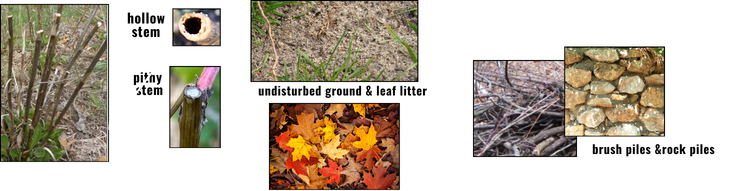

DID YOU KNOW It is estimated there are approximately 500 bee species native to B.C.
STEP 4: Protect Overwintering Sites
Leaves and garden materials provide food, insulation from the cold and nurseries for eggs, larvae and pupae during the winter
months.
- Limit exuberant fall yard and garden cleanup.
- Avoid shredding the leaves with a lawn mower to protect insects, cocoons, chrysalises and eggs that use the leaf layers for cover or incubation.
- Rake and pile leaves around shrubs and in garden areas.
- Wait until late spring to prune and clear away dried garden debris.
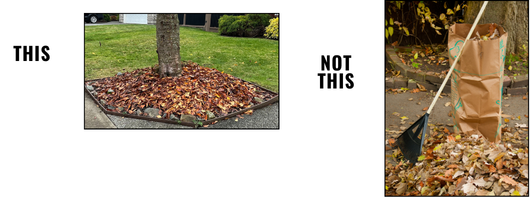
STEP 5: Avoid Pesticides & Insecticides
Supporting local pollinators means avoiding the use of pesticides, namely insecticides, that can affect more than the target insect, which means beneficial ones are harmed too. There are many sustainable ways of managing “pest” populations without needing to resort to chemical controls.
Further Learning Opportunities (for Mid Island, B.C.)
For more information on how to support local pollinators in the Mid Island region, please visit the following:
- Nanaimo & Area Land Trust (NALT) Pollinator Project Since 1995, NALT has been working to support, promote and protect the natural values of land and water in our area.
- iNaturalist iNaturalist is a nonprofit organization that supports science and conservation.
Resources
Websites
- Xerces Society for Invertebrates
- Native Bee Society of British Columbia
- GreenPeace
- Pollinator Partnership Canada
- Common Pollinators of BC
- Garry Oak Recovery Team Society
- E-Flora BC Electronic Atlas of Flora of BC
- Habitat Acquisition Trust. (2024). Gardening with Native Plants
Books
- Mader, E., et al. (2011). Attracting Native Pollinators/The Xerces Society Guide. North Adams, MA: Storey Publishing. ISBN 978-1-60342-695-4
- Lee-Mader, E., et al. (2016). 100 Plants to FEED THE BEES/The Xerces Society. North Adams, MA: Storey Publishing. ISBN 978-1-61212-701-9
- Stevens, L. (2024). Common Insect Pollinators Field Guide. Nanaimo, B.C.: Nanaimo Area & Land Trust.
Photo Credits
- Resources as numbered, CANVA & VIMGA members
- 2025 Vancouver Island Master Gardeners Association
Vancouver Island Master Gardeners
Vancouver Island Master Gardeners are local volunteers who educate the gardening public with current, science-based and environmentally responsible horticultural information. As a chapter of the Master Gardeners Association of BC (MGABC), our program and priorities shape healthy communities and a healthy planet.