 Vancouver Island Master Gardeners
I had a shoulder injury from years ago flare up this spring, along with a trigger finger issue from too many hours at a keyboard. I lost ten quality garden days in April for ‘‘weed prevention’. My family can help, when asked; but between their schedules (and lack of interest), it’s not a lot. By the time I got back outside, I had lost ground on those weeds.
What stopped me wasn’t a single dramatic injury — it was the uncertainty. Would this settle down, or keep recurring? Get worse over time? Coincidentally, my first volunteer advice clinic and Garden Advice Party had questions from people who wanted ‘less work’ due to health and/or aging. I began researching how to adapt a garden — not just for aging or long-term accessibility, but for anyone managing recurring issues, or simply needing it to hold up when life intervenes. That research pointed in two directions: how you work in the garden, and how the garden itself is set up. Both matter.
How you work: ergonomics in the garden
1. Work in short intervals and switch tasks regularly.
OSU Extension’s Gardens Are for Everyone (EM-9403) recommends changing gardening tasks every 10 to 20 minutes and alternating which part of your body you are using. Moving from weeding to pruning to watering distributes the effort and gives stressed muscles time to recover before the next task.
2. Where you put your head matters.
Gardening naturally pulls the head forward and down for extended periods — a position that creates sustained tension in the neck and upper back. Energize Health, a Calgary physiotherapy and chiropractic clinic, advises squatting and bending at the knees when working at ground level, using the glute and thigh muscles rather than loading the lower back, and taking frequent breaks to stretch the neck rather than holding one position throughout a session. When you must work close to the ground, a stool or kneeler with handles keeps your spine more neutral — and the handles help you get back up without twisting.
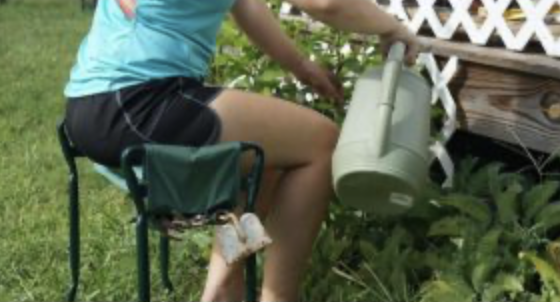
3. The right tools reduce cumulative strain.
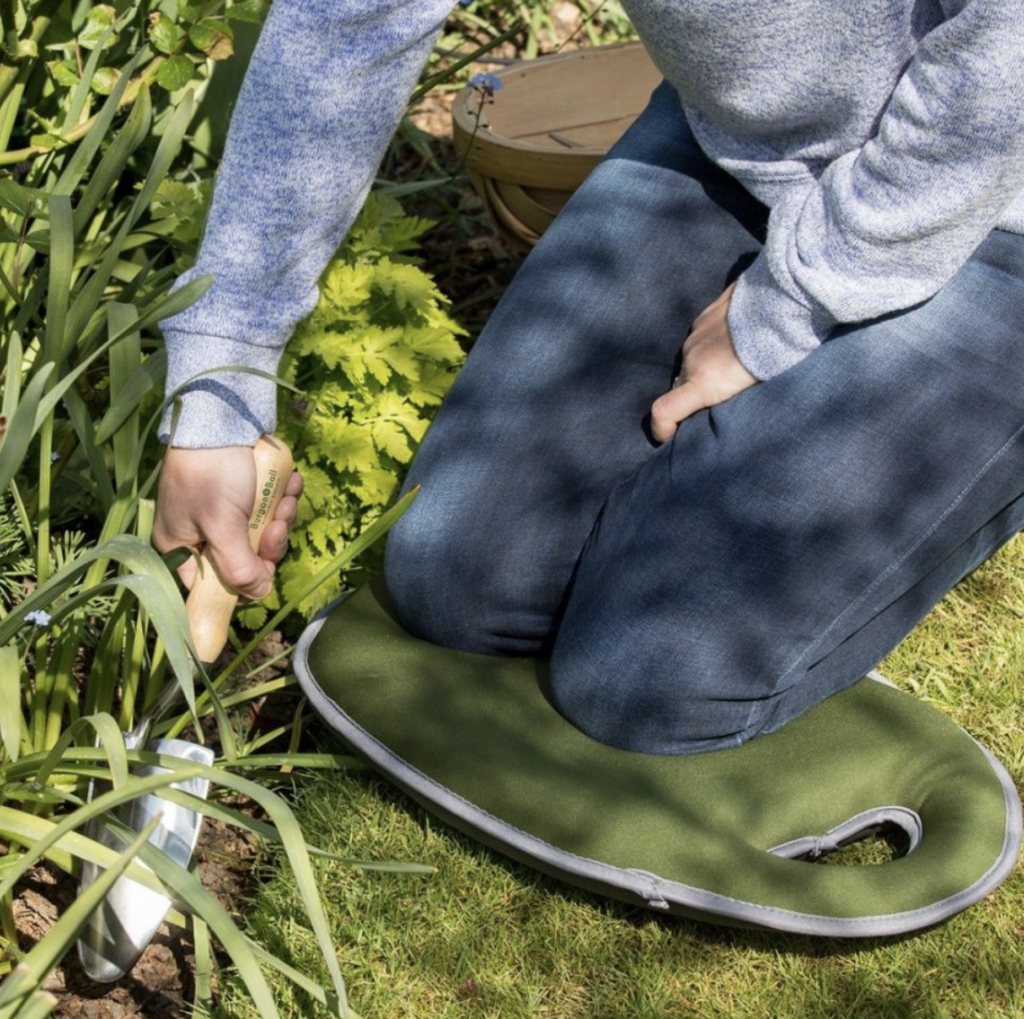
There are many articles on tools, covering kneeling pads, stools, and tools with cushioned grips, curved handles, and longer shafts. The OSU publication also suggests that wrapping existing tool handles with water pipe insulation or bicycle grip tape is a low-cost alternative to replacing equipment entirely.
How the garden is set up: reducing what it asks of you
Many gardeners facing mobility or time constraints reach for the same toolkit: mulch to suppress weeds and hold moisture; drip irrigation or water timers to reduce hand-watering; and raised beds to bring the work up off the ground. These are all worthwhile but they only address part of the physical setup. What needs to be addressed is what does this garden actually need from you, and is that still a reasonable ask?
1. Let plant selection do some of the work.
Gardens Are for Everyone also advises choosing plants that don’t need frequent watering, pruning, staking, or deadheading — and favouring disease- and pest-resistant varieties. Perennials and shrubs look after themselves far better than annuals. A bed anchored with well-chosen perennials won’t fall apart in your absence the way an annual planting will.
2. Edit your beds, don’t demolish them.
A 2017 article from the University of Kentucky Cooperative Extension Service suggests that deep perennial beds can be made much easier to manage by narrowing them and backing them with shrubs. You don’t have to remove what you’ve built. Editing the edges and adding something self-sufficient at the back keeps the character of the garden while reducing the upkeep. Small structural changes, made gradually, add up.
3. Know the difference between what you love and what you just maintain.
OSU Extension’s accessible gardening guidance encourages gardeners to think honestly about which areas they enjoy versus which ones feel like obligation. That distinction shapes every other decision. A garden full of areas you feel obligated or responsible for — rather than areas you enjoy spending the time on — is its own kind of maintenance problem.
4. Design for the help you actually have.
Most of us have some help available — family members who will mow, move heavy things, or water when asked. Think about which tasks can genuinely be handed off, and design around those. Clear paths make mowing easy to delegate. Grouping containers near a tap does the same for watering. Match the garden’s demands to the help that’s actually realistic.
The goal isn’t a garden that requires nothing. It’s one that works with your body — and holds together when you can’t be there.